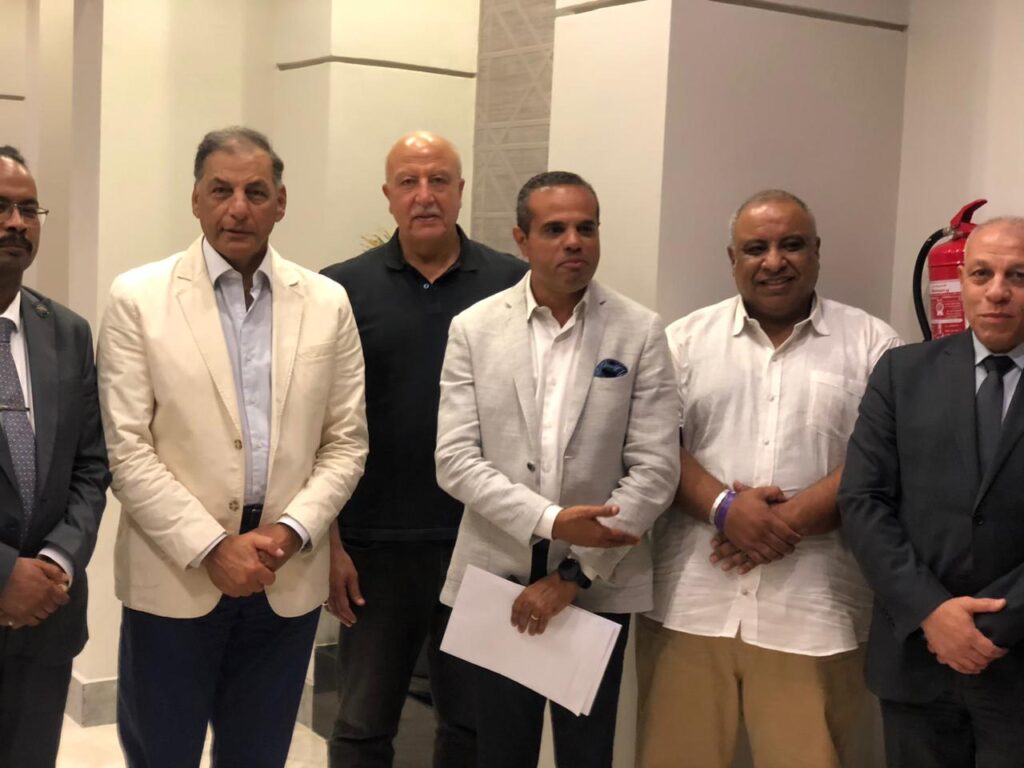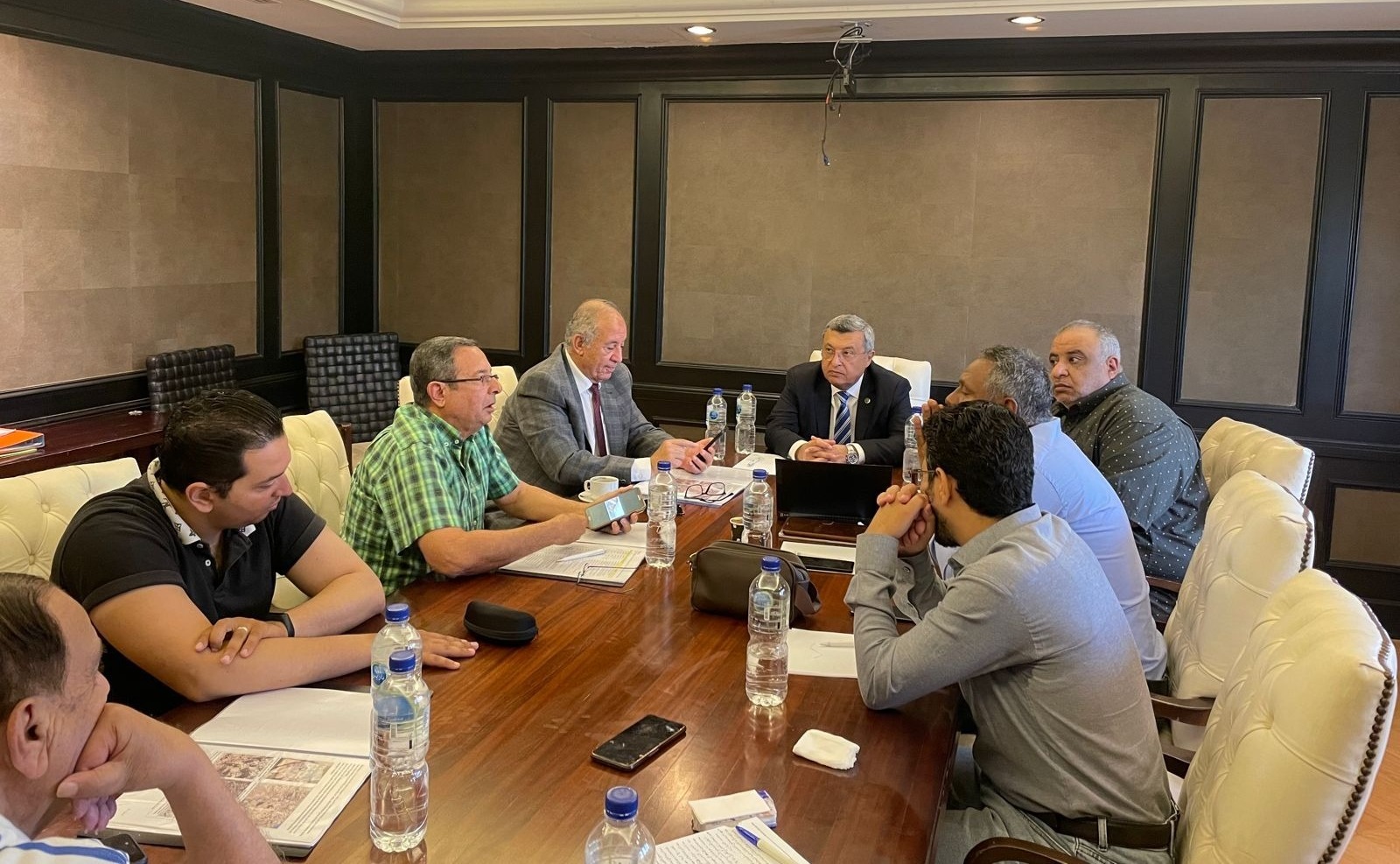
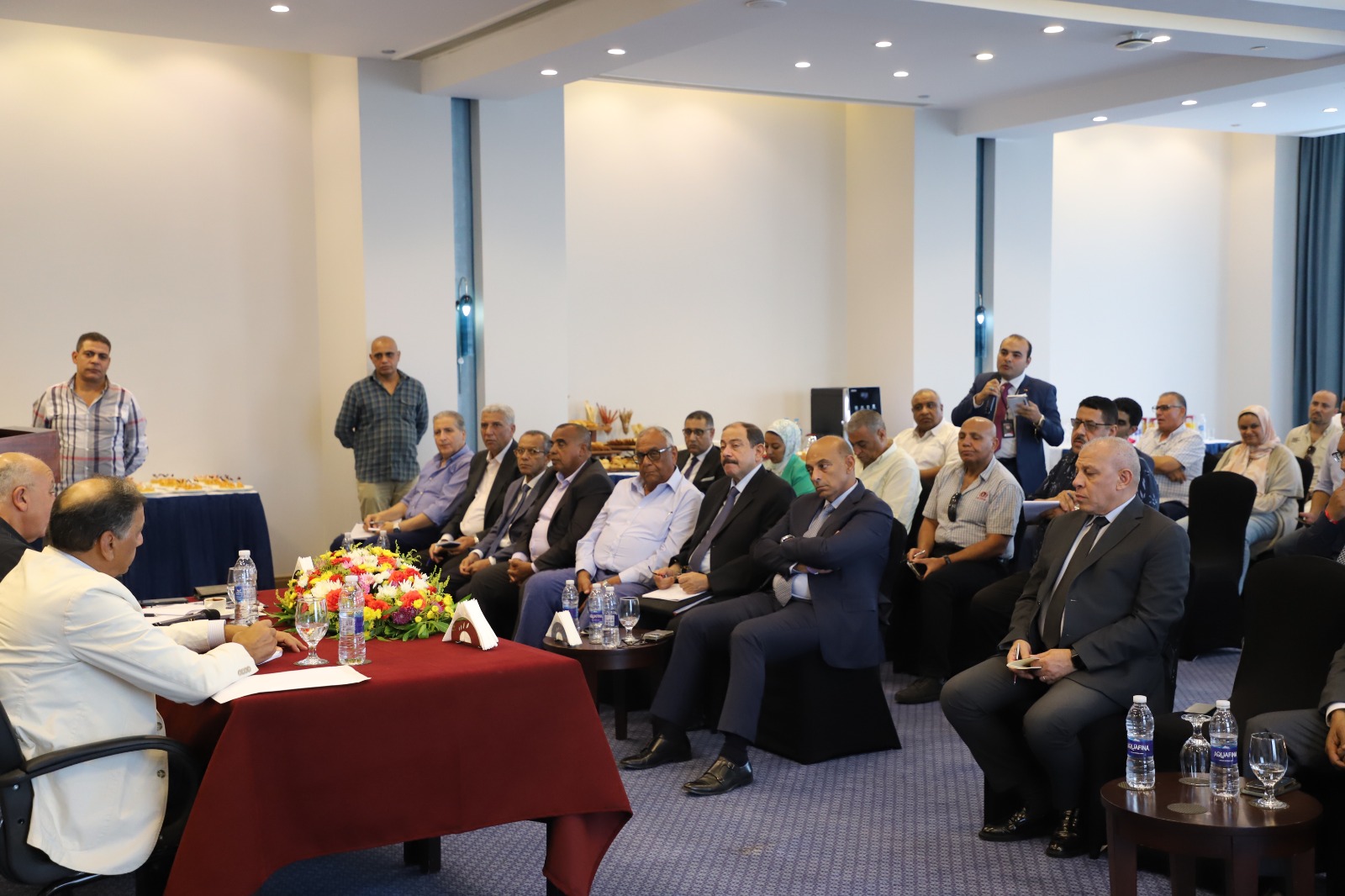
North African Industrial and Mining Company participated in attending the meeting that took place with Red Sea investors, with Sir. Advisor to the President of the Republic


Mr. Haitham Al-Abadi, Managing Director of the company, and Ibrahim Al-Ajmi, Director of Administrative Affairs of the company, participated in the meeting from the North African Company.

During the meeting, Mr. Haitham Al-Abadi presented a set of problems facing the mining industry in the governorate, in addition to some proposals for developing the mining sector, which were summarized in:

Firstly, it is proposed to establish a technical school to train, qualify and educate youth, specializing in the field of mining, to accommodate the market’s needs in the near future. Al-Abadi expressed the company’s willingness to coordinate in this project, and the Advisor to the President of the Republic directed him, calling on the Upper Egypt Development Authority, which was attended by Mr. Major General President The Upper Egypt Development Authority discussed the proposal and ways to implement it. Al-Abadi also presented a set of administrative bureaucratic obstacles in completing approvals for mining companies and investment companies in the mining sector and other sectors, especially obtaining environmental approvals. Al-Abadi proposed activating the one-stop-shop system to avoid such obstacles, and he directed Mr. Advisor to the President of the Republic, Mr. Chairman of the Golden Triangle Authority, quickly activate the Authority’s role in overcoming these obstacles. Al-Abadi also added by recommending solving the problem of random mining by reintegrating them into companies in a safe and legal manner.

Ibrahim Al-Ajmi, Director of Administrative Affairs at the North African Company, made recommendations to adopt e-mail and fax in communication between agencies to address slow correspondence and obtain approvals. He also called for expanding the period for renewing sign permits, which are currently scheduled to be renewed every three months, to be an annual or semi-annual renewal.

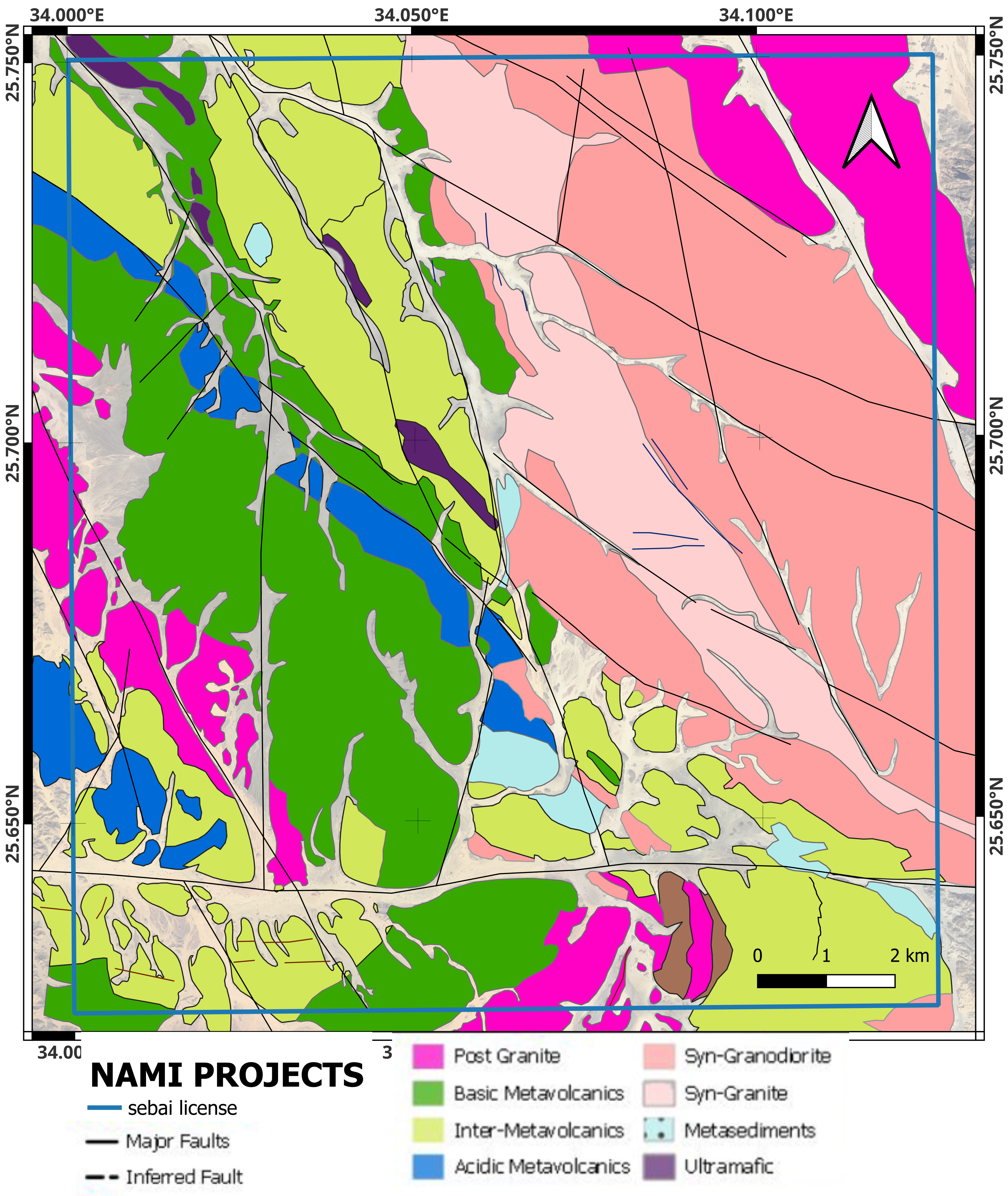
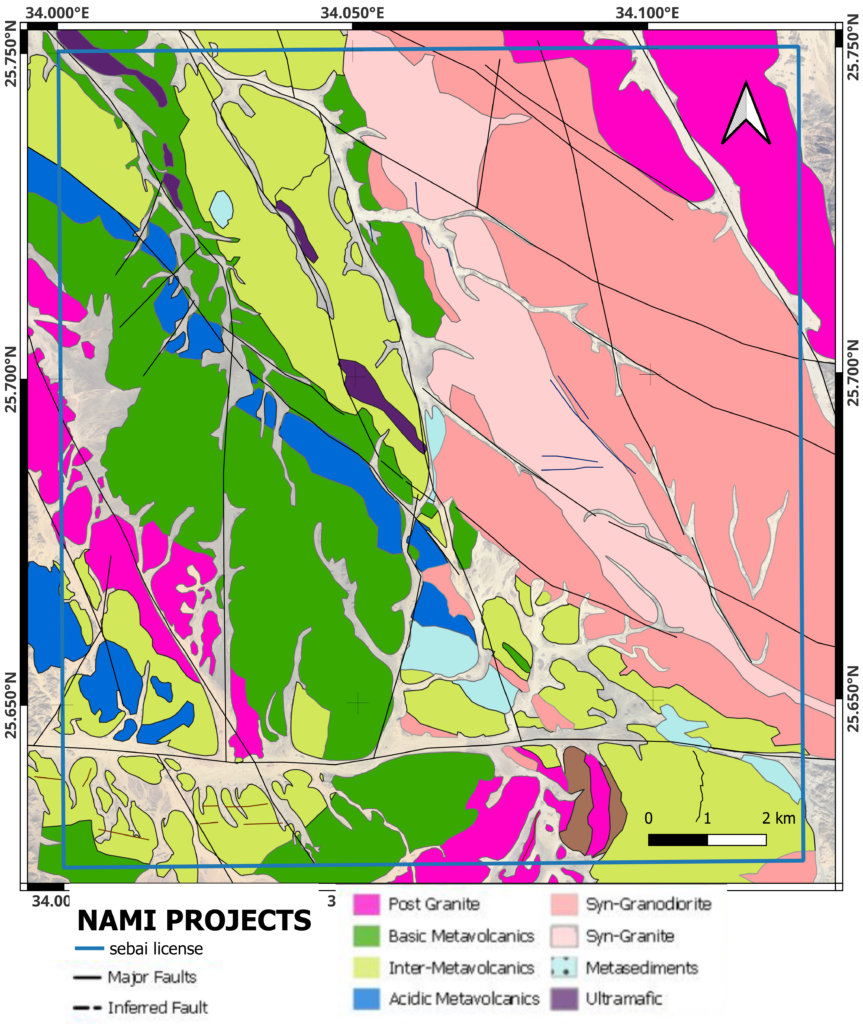
Regional Geology Of Sebai Block (DF 73)

Regional Geology Of Sebai Block (DF 73):


The geology of the area from east to west consist of sequence of syn to post tectonic granitoid rocks in the eastern corner along wadi Dabbah -Sebai granites, Along the NW Najd Fault system shear zones, a sequence of ophiolite mélange rock units; serpentinite and related rocks, chlorite-sericite greenstone meta-gabbro and meta-andesite, chlorite-talc-ankerite/carbonate schist, carbonate schist, yellow to reddish- brown colour silica-carbonate altered rock (listwanite), acidic to intermediate metavolcanics, basic to intermediate metavolcanics, volcaniclastics, tuffs, agglomerate, metasediments, and granite/granodiorite.

Within the concession area the tectonics are dominated by compressional structures, folds, and shear zones in addition to the island arc and ophiolite layered and intrusion rock sequences there are a variety of syn to post tectonic intrusive rocks . As shown on the Regional Geology Map .


Egypt Eastern Desert (EED) North Africa (NAMI) had awarded in The EED 2 blocks comprise 351km2 of greenfield exploration through Arabian Nubian Shield.


Egypt Eastern Desert (EED)

North Africa (NAMI) had awarded in The EED 2 blocks comprise 351km2 of greenfield exploration through Arabian Nubian Shield.

This area hadn’t been explored with the Modern techniques ,So Our Technical team had employed optical remote sensing data to extract geological information, depending on the geological setting of area of interest, the use of optical multispectral images is playing an important role in recent years by providing a wealth of information in this field, such as geological structure and lithological mapping, the optical images can simplify the interpretation and improve the accuracy of recognizing and detecting lithological units.. The land package is divided into 2 Blocks:

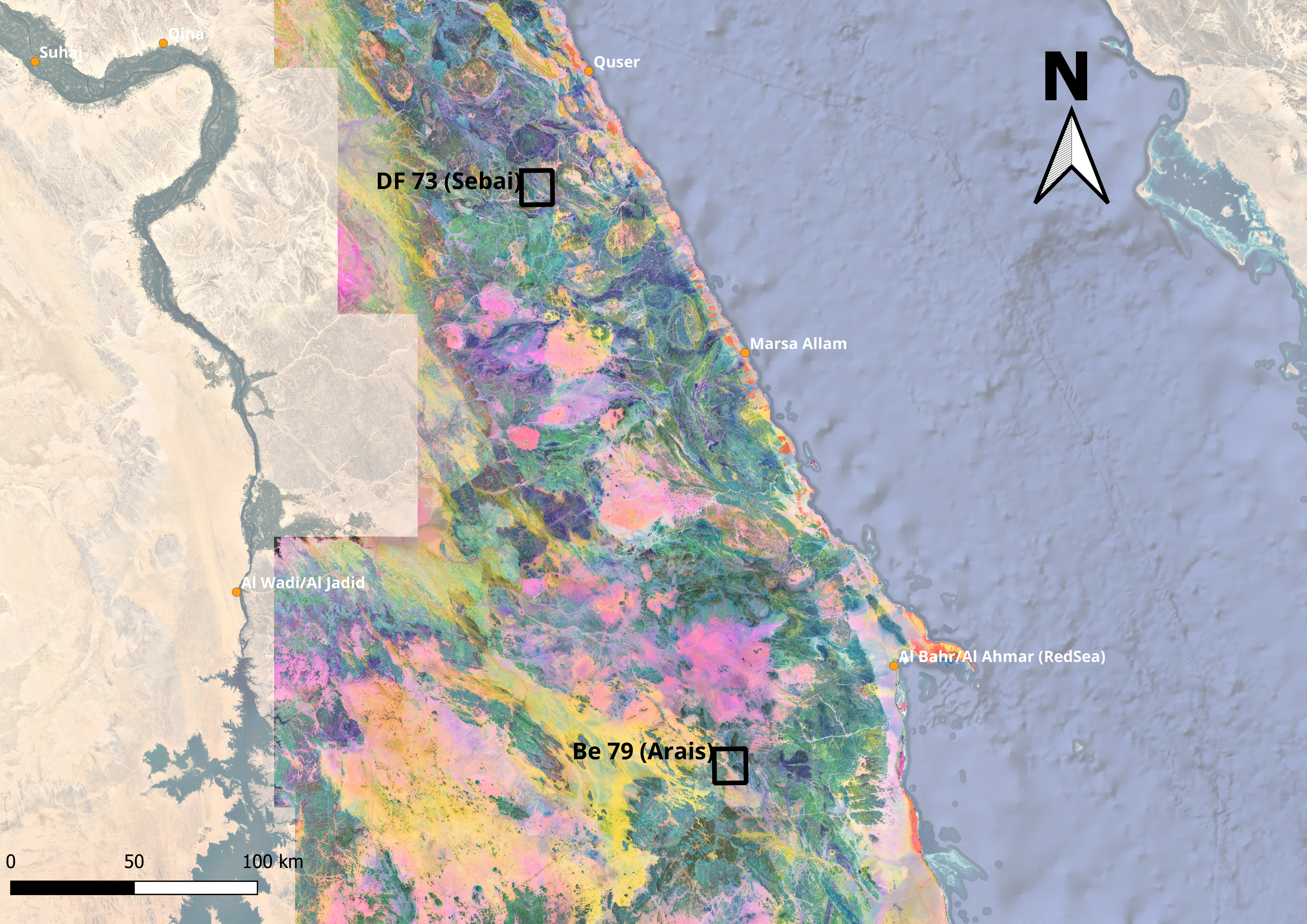
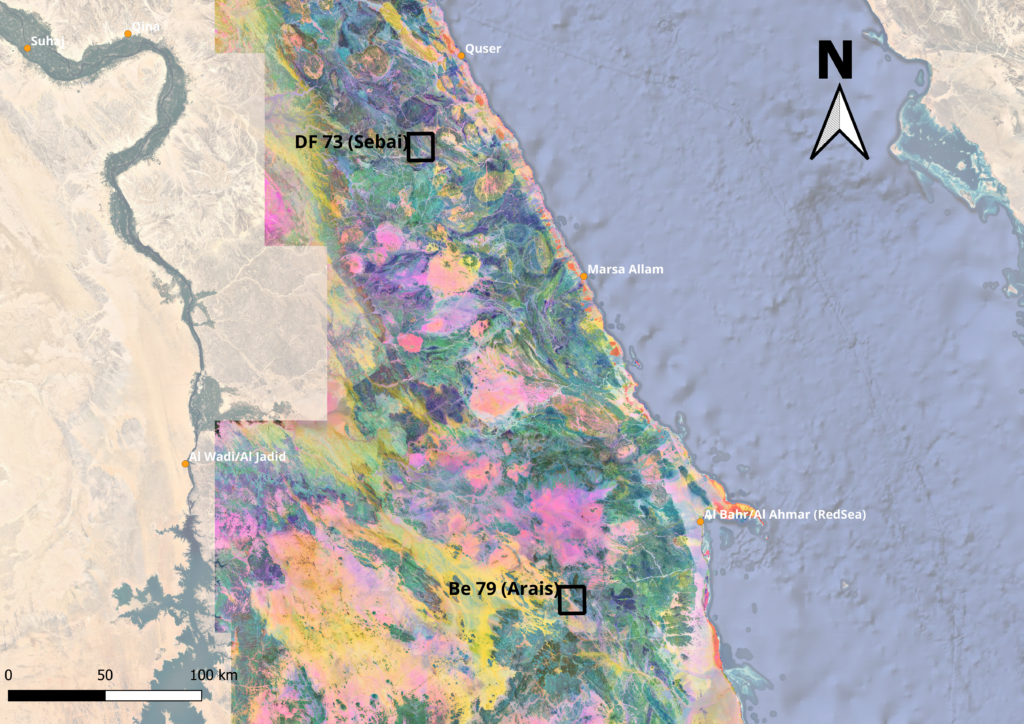
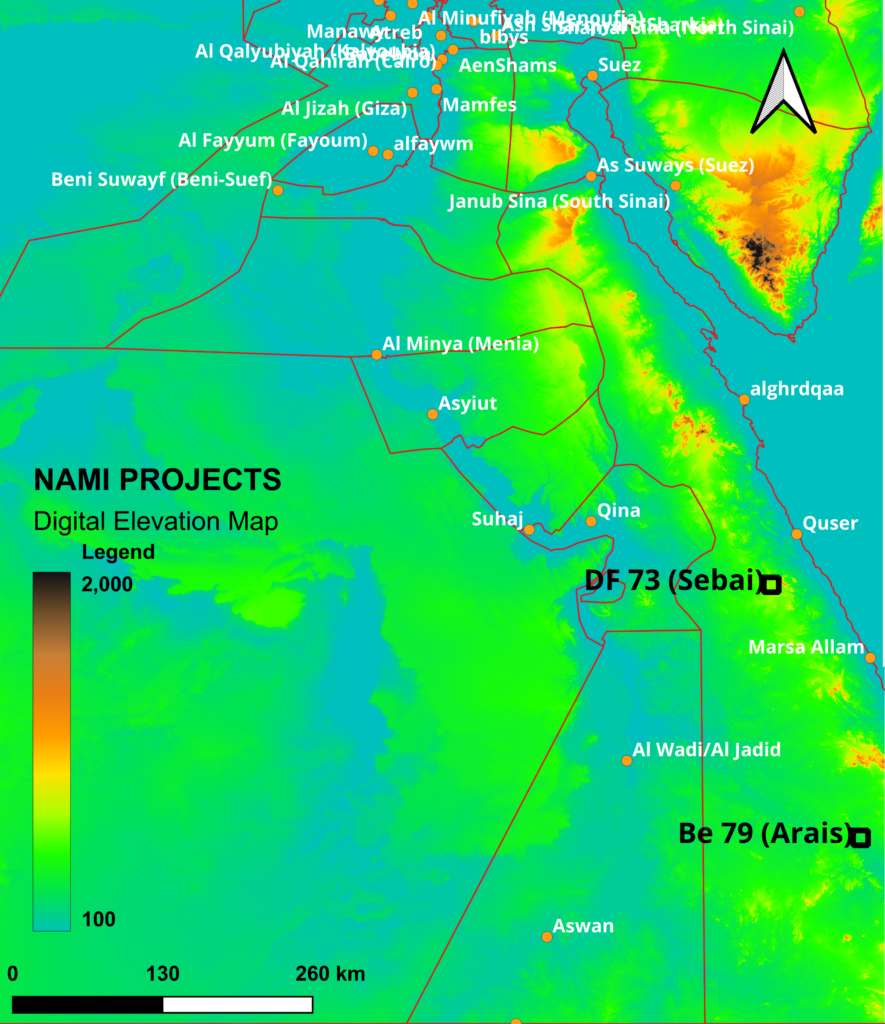
  • Sebai Block DF 73  (174 km2) – The concession area lies in the Central Eastern Desert, southwest of Qusier City to form a part of the Neoporeterozoic evolution of the Nubian Shield .
  • Arais Block Be 79 (177 km2) – Concession site is located northwest of the city of Shalaten, 40 km on asphalt road of Shalaten – Marsa Alam, and then 80 km on the asphalt road to the village of Abraq and then 20 km along desert track to the area .
  • Remotely sensed data offers powerful tool in identifying the variations in surface mineralogy, structural elements, and geologic contacts, visual interpretation and quantitative image processing including band ratio and principal component analysis (PCA) coupled with fieldwork could be very successful in lithological mapping of the gold mineralization, remotely sensed images cannot replace this level of expertise; however, they can form valuable supplements that are more cost-effective than traditional methods, remote sensing data can give information for a larger area in inaccessible regions and help to isolate potential areas from non-interesting areas for further exploration.
  • To map bedrock and identify presence and abundance of specific minerals at specific scale, it is possible to use remote sensing techniques, suitable image processing techniques are used to extract useful geological information . From

Sentinel 2 PCA Mosaic Texture drived from AW3D30 Digital Surface Model (DSM) :

  • DataSer : Sentinel 2 Level L2Av
  • Analysis : PCA For (B2,B3,B4,B8,B8A,B11&B12)
  • Band Composition : PC1/PC2/PC3 in RGB
  • Resolution : 30 meter/Pixel
  • CS : WGS1984

Digital Elevation Model of NASADEM comes in 1 arc degree blocks :

  • Spatial Resolution: 1 arcsecond / Pixel
  • CS: WGS1984

North African Company extends its sincere congratulations on the occasion of the Hijri New Year

By the beginning of Hijri new year .. praying to Allah to make it full of peace, happiness and prosperity for all Islamic and Arabic nation

What is the Golden Triangle project in the Eastern Desert?


The Golden Triangle project is one of the most important major national projects that serve the southern region of Egypt as one of the development projects that depend on the existing mineral resources.
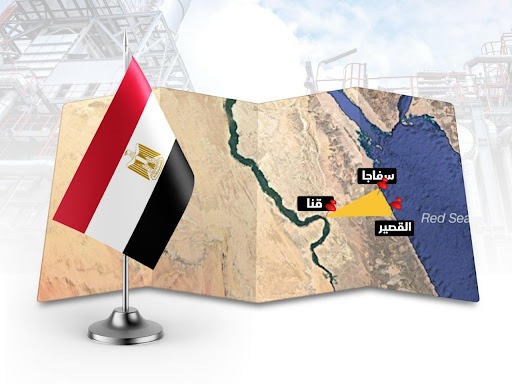
The golden triangle is located on the coastal road. It is the one that connects the eastern borders of Egypt from the north to the southern borders. The triangle area is sandwiched between the Red Sea Governorate in the east and Qena Governorate in the west. It has a waterfront of 80 km, extending between the borders of the city of Safaga in the north and the borders of the city of Qena. And in the short to the south and west. The area of the triangle extends over 155 square kilometers (60 square miles) up to the Qena border.
The primary objective of the Golden Triangle project
Optimal utilization of raw materials in Egypt the main objective of the project, such as gold and phosphates, and increasing their return to the national economy.
The Egyptian government targets total investments of $16.5 billion, within 30 years after implementation. The project will also create great investment opportunities in southern Egypt, especially in the cement, ceramics, and quarries sectors.
“The project will raise the standard of living for the residents of Qena and Sohag governorates.” Ali Hamza, head of the Investment Committee in Upper Egypt at the Egyptian Federation, expected the investor associations that the project would stimulate tourism in the region.
Information about the Golden Triangle project, which the state considers one of its major national projects:
* The project is located in the Eastern Desert, on an area of more than 2.2 million acres, between Qena, Qeft, Safaga, and Al-Qusayr.
* The project includes industrial, mining, tourism, agricultural, and commercial areas.
* The region contains many elements of tourism, such as pristine beaches and archaeological sites.
The region is rich in mineral and quarry resources, such as gold, basalt, white sand, limestone and phosphate rock.
* One of the government’s goals in the project is to direct part of the population to live in the new area instead of the Nile Valley, and it is expected to accommodate about 2 million people.
* The project will be built in 6 phases, the first phase of which will take 5 years, and the project will take 30 years to complete.
* A capital will be established for the Golden Triangle, 100 km away from Qena.
* The Italian company “De Bologna” developed the master plan for the project in cooperation with the Industrial Development Authority.
* The Italian company’s fees were paid in the amount of $1.7 million, with a grant from the Kuwait Fund for Arab Economic Development.
* The volume of project investments is about $16.5 billion.
* The project will provide about 350,000 job opportunities.
* The project achieves annual revenues for the state ranging between 6 and 8 billion dollars annually.
* Infrastructure investments for the project amount to about $2.5 billion.

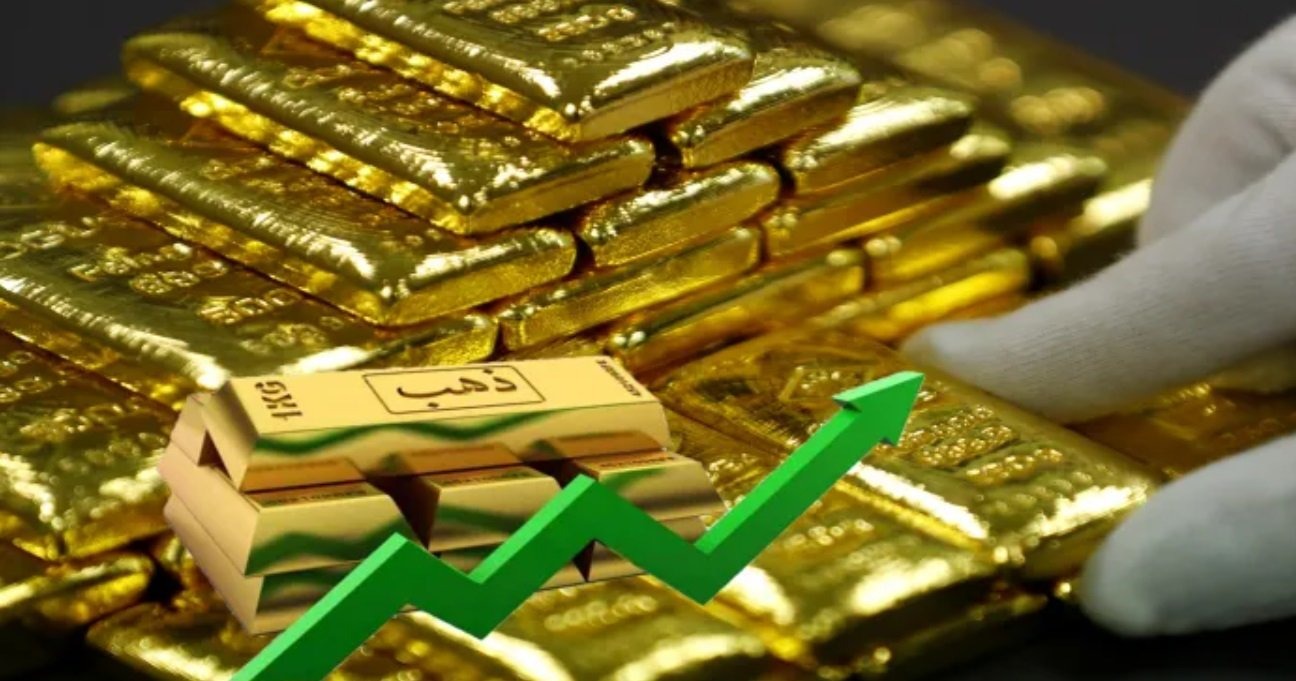
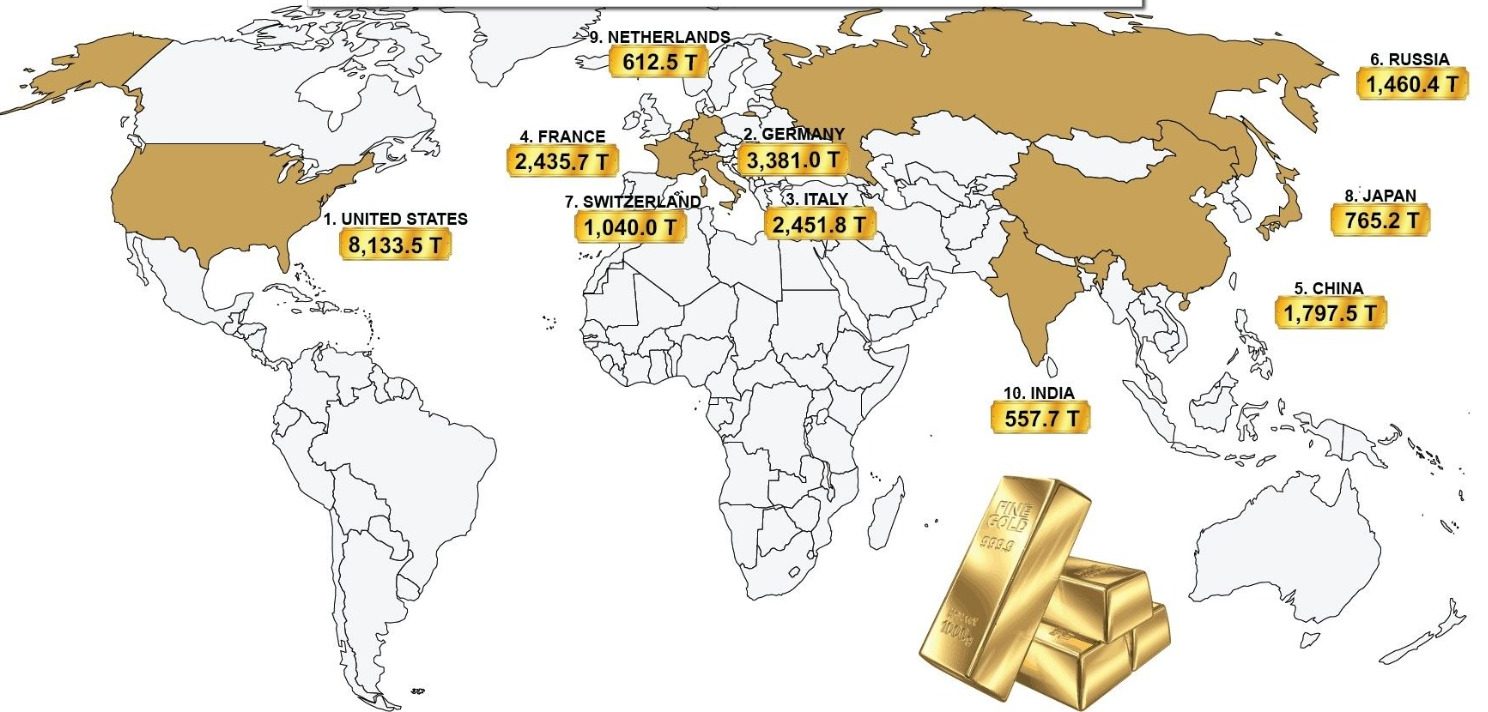
Egypt ranks third in the world in the growth of gold reserves during 2022

According to a report issued by the World Gold Council, the Central Bank of Egypt was the “largest buyer of gold” among global central banks during the first quarter of 2022, after it acquired 44 tons of the precious metal in February, and Egypt is also working to increase domestic gold production in the long term. Through the Sukari mine and others, Egypt also expanded in issuing tenders for gold exploration last year, and English, Canadian and Egyptian companies, including the North African Mining and Industry Company, won an international tender for gold and mineral exploration in Egypt’s eastern desert
The Egyptian General Authority for Mineral Resources said, in a statement issued in June 2022, that the result of the second round of bidding to search for gold and minerals in the Eastern Desert resulted in the awarding of 8 regions to 4 foreign and local companies, and the result of the second round of bidding represents success in attracting new investments despite the challenges. The successive global crisis represented by the Corona pandemic and then the Russian-Ukrainian crisis, with their negative repercussions on the global economy and pumping investments, the first round of bidding had resulted in the awarding of 82 regions in the Eastern Desert to 11 Egyptian and international companies
The Central Bank announced an increase in the value of gold listed in foreign exchange reserves during January 2023, to reach $7.773 billion, compared to $7.326 billion at the end of December 2022, an increase of $447 million

Gold trends during 2023

And “Gold Bullion” expected that the performance of gold in 2023 will be much better than in 2022 due to increased demand from central banks and potential ongoing geopolitical tensions. From new mines, interest rates and a weak dollar
The report touched on four reasons that support gold in 2023, including that central banks around the world, especially in China, Turkey and India, are buying gold at a record pace, and this trend has continued for the past 13 years in a row, but its pace has accelerated recently as they have increased their reserves. According to the World Gold Council, demand for gold from central banks to date is 673 tons, surpassing all annual totals since 1967

According to a report issued by the World Gold Council, central bank purchases are largely driven by flight towards safer assets due to high inflation, as the People’s Bank of China announced that it had bought 32 tons of gold at a price of about $ 1,650 an ounce, and this trend is expected to continue in 2020. 2023, which may contribute to an increase in gold prices

The Gold Billion report added that the limited supply of gold from new mines supports the rise in prices, as gold mining represents about 75% of the annual supply of gold, so the availability of gold depends to a large extent on mining production. Stagnant in recent years, it seems to have peaked in 2018, and according to the World Gold Council, the total supply of gold increased slightly (by 1% on an annual basis) to 1,215 tons as of the third quarter of 2022

Gold Bullion explained that the Federal Reserve’s tendency to raise interest rates at the fastest pace in history during 2022, to record interest at 4.5%, is expected to continue until late 2023, as interest rates are considered one of the main factors that can affect the demand for gold. It could affect gold’s attractiveness as a store of value or as an inflation hedge. When interest rates are low, investors are more likely to buy gold as a safe-haven asset, which could drive its price up

And about the fourth factor that supports gold, is the weakness of the dollar, as gold prices and the value of the US dollar tend to move in opposite directions. This led to a rise in gold prices, as an ounce targets $2,000 levels

North Africa congratulates the nation on the occasion of Eid al-Adha

Sir. Chairman of the Board of Directors of the North African Industries and Mining Company,  Sir. Vice-Chairman of the Board of Directors, Sir. Managing Director of the company, and members of the Board of Directors, extend their sincere congratulations to the Arab and Islamic nation on the occasion of the blessed Eid Al-Adha, Hoping that Allah return it with goodness and blessings, praying to Allah Giving us peace and prosperity for our nation in that Blessed days

Egypt is seeking global leadership in gold extraction by exploiting the strategic reserves of the Eastern Desert.

Egypt has promising opportunities to be among the world’s largest producers, exporters, and manufacturers of gold. Gold production in Egypt is concentrated in three locations, all of them in the Eastern Desert, parallel to the coastal strip of the Red Sea: Jabal al-Sukkari, the Hamish area, and Wadi al-Alaqi, next to the Golden Triangle area between Safaga and al-Qusayr. 94 gold sites, including the Jabal Sibai site, fall within the scope of the search and exploration work for the North African Mining and Industry Company, according to the first global bid announced by the Mineral Resources Authority on Thursday, November 19, 2020
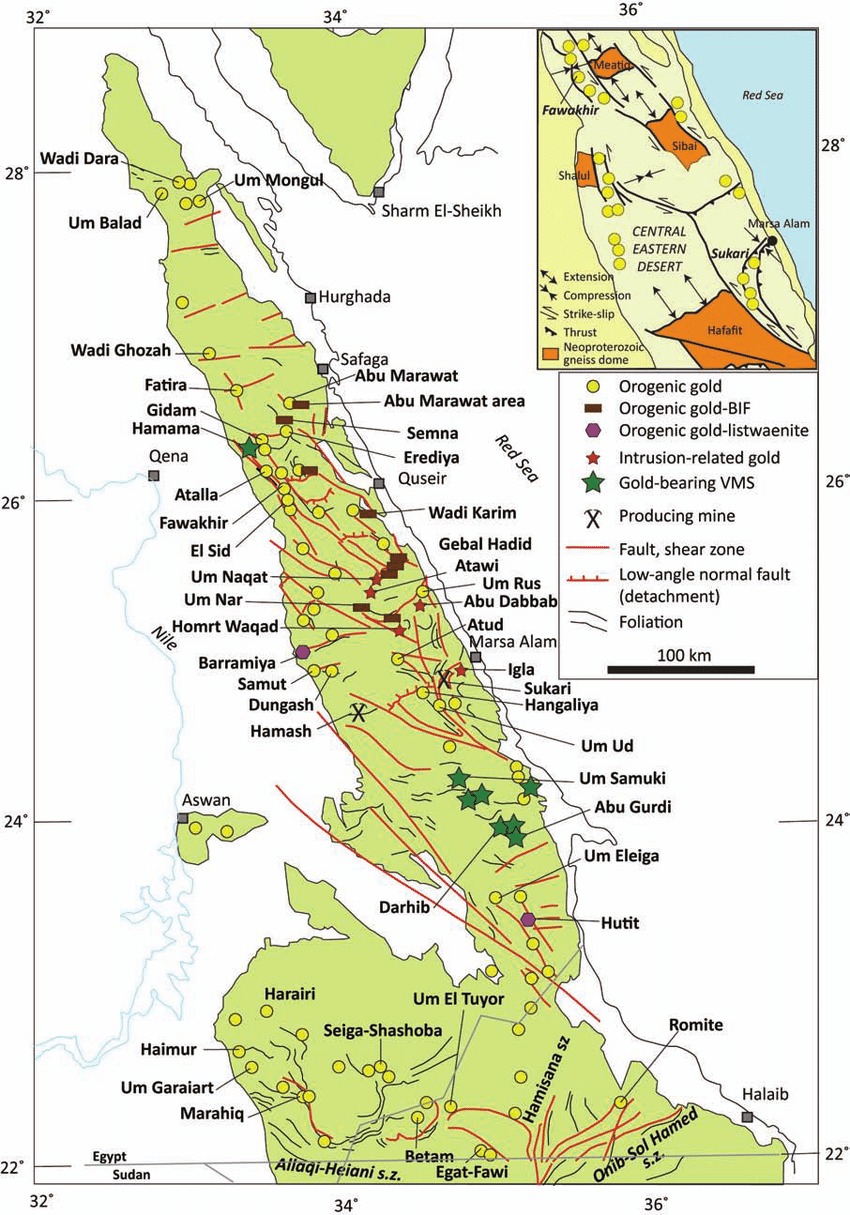
Map of gold mines in Egypt

Diabetic mine
A huge gold mine is located in the Jabal al-Sukari area in the eastern desert, 30 km south of Marsa Alam. It was discovered in 1995, and work began in 2009. An integrated factory was established to produce gold, silver, and copper in the region, and it is one of the 10 largest mines in the world in terms of reserves. And production, as the value of the reserves currently in it is estimated at about 14.5 million ounces, and approximately 83 tonnes of gold have been produced since 2010 until now, with an estimated value of about $7.2 billion, with an average production of 250 thousand ounces in the first year, increasing to 530 thousand ounces annually. The project’s investments amount to about $1.7 billion, and it will accommodate about 4,500 direct and indirect job opportunities

Hamas mine
It is located 100 km west of the city of Marsa Alam in the Eastern Desert, near the Wadi El-Gemal Reserve in Hamata. The first experimental gold ingot was produced for the first time in Egypt from the mine in 2007, and the production in February 2010 reached about 65 kg

Wadi Al-Alaqi Mine
It is located 250 km southeast of the city of Aswan, in southern Egypt, and the results of exploration were fruitful in the areas of Sega, Umm Shashouba, and Haymur, where gold was discovered in economic quantities and at high concentration rates ranging from 2 to 4 grammes  per tonne

Atoud mine
It is located about 55 km west of Marsa Alam and 5 km south of the Edfu-Marsa Alam road. Gold is found in the gold-bearing veins of Maro, spread over an area of about 9 km2, confined to gabbro rocks forming Mount Atoud

El-Bramya mine
It is located at the 105th kilometer east of the city of Edfu and is crossed by the Edfu-Marsa Alam road. There is gold metal in the veins of Marw, which are irregular in shape and thickness. It is considered one of the largest and richest gold mines in Egypt. The reserve estimate is located in three ranges. The first range contains 14.8 million tonnes of ore with a percentage of 1.07 gm gold per tonne and contains an amount of gold of 16 tonnes, while the second range contains 1.22 million tonnes of ore with a gold ratio of 2.85 gm per tonne and contains an amount of gold of 3.5 tonnes, and the third range contains 0.5 million tonnes of ore with a proportion of gold of 3.00 gm per tonne. It contains 1.5 tonnes of gold

Fatiri mine
It is located at the 30th kilometre north of Safaga-Qena Road, and there are gold reserves of about 70,000 tonnes, with an average gold content of 14 g per tonne

Abu Marwat mine
It is located to the south of the Safaga-Qena road near Jabal Abu Marwat and to the northeast of Wadi Abu Marwat, one of the branches of Wadi Samna. It contains gold and silver minerals associated with minerals of zinc, lead, and copper, with a reserve size of 290 thousand tonnes and a gold ratio ranging between 3.8 and 7.7 g per tonne. And silver ranging between 43.3 and 102 g per tonne

Samna mine
It is located south of the Safaga-Qena road, and there is gold in the veins of white quartz, which bear gold, with a reserve size of about 10 thousand tonnes and an average gold content of 15.5 g per tonne

El-Ardya mine
It is located south of the Safaga-Qena road. The mineral is found in gold-bearing quartz veins with a volume of about 20 thousand tonnes and an average gold rate of 7.75 gm per tonne, in addition to about 50 thousand tonnes of ore with an average of 2 gm per tonne

Hmama mine
It is located approximately in the middle of the distance between Qena and Safaga, 45 km south of the Qena-Safaga road. There is gold and silver in the Gosan range, and it consists of oxides and carbonates resulting from the oxidation of sulphides of zinc, copper, and lead. The percentage of gold in surface samples ranges from 0.1 to 5.5 g per tonne, while the percentage of silver ranges from 0.2 to 18 g per tonne

Umm Oud mine
It is located 55 km southwest of the city of Marsa Alam and 6 km west of Sabahiya. Gold is found in white-grey quartz veins. The volume of reserves is 15,600 tonnes, and the proportion of gold is 22.7 g per tonne

Umm Samra mine
It is located 60 km northeast of Al-Baramiya and 45 km on the Edfu-Marsa Alam road. Gold is found in the gold-bearing quartz veins at a rate ranging from 0.5 to 12 g per tonne

Samut mine
It is located in the southeast of Al-Baramiya, about 45 km to the south of the Edfu-Marsa Alam road. Gold is found in gold-bearing quartz veins, with an average of 10 grammes per tonne. Gold is also found in the transformation zones associated with quartz veins, with an average of 2.5 grammes per tonne

Dengash mine
It is located south of the Edfu-Marsa Alam road. Gold is found in quartz veins at a rate ranging from 1 gramme to 21 grammes per tonne. Gold is also found in the transformation zones associated with quartz veins at a rate ranging between 0.5 and 3.7 g per tonne
Halayeb and Shalatin areas
The Halayeb and Shalatin regions contain rocks full of gold. Al-Anbat Mountain extracted 7 kg of it in the form of a gold vein, and another vein weighing 6 kg came from another region of the same mountain

golden triangle
There are also 94 gold sites in the Golden Triangle region, which is located in the Red Sea Governorate, including the Jabal Al Sibai site, which falls within the scope of the research and exploration work of the North African Company for Mining and Industry

North Africa For Industry and Mining (NAMI) is discussing the progress of the research and exploration plan in the concession areas

The senior management of (NAMI) Company met in Cairo, in the presence of Eng. Osama Kamal, Chairman of the Board of Directors of the North African Company for Industry and Mining, Major General Dr. Ahmed Abdullah, Vice Chairman for Board of Directors, and Eng. Haitham Al-Abbadi, Managing Director and CEO of the company, along with the technical and advisory consultants of the company, to determine the completion of the search and exploration plan for the past period.
The periodic monthly meeting also discussed ways to develop exploration and research tasks in the concession area in Jabal Sibai, East of the of Al-Qusayr city in the Red Sea. Vision and desired goals as a national Egyptian company seeking the best investment of local resources to achieve the highest added value in the field of gold production and associated mines in Egypt.

The ancient Egyptians are the first people on earth using gold, and 120 mines in the eastern desert are the result of their discoveries

Over time, gold remains in front of two images. The first is that it is the master of all metals in a mysterious way, and the second derives its strong presence from its scarcity. Gold, according to the ancient Egyptians, is a beautiful story that invites contemplation of this precious metal.
Ahmed Selim Awad, a researcher in archaeological history, revealed the details of gold in the Old Kingdom, through the following lines:
1- Gold remains associated with wealth, but in ancient Egypt, it was also associated with power and remained synonymous with its meaning, as it was associated with a spiritual moment in which bodies crossed into the spirit world, where the ancient Egyptians believed that the bodies of the righteous dead who became bright souls turn after their death into bodies of gold.
2- The ancient Egyptians left about 120 gold mines in the eastern desert extending to Sudan, and it was used for personal adornment only and not as a currency.
3- The ancient Egyptians are the first peoples of the earth to use gold, as they have come up with the methods for the search, extraction, and extraction operations, as they put their hands on all of Egypt’s gold reserves, and the process of extracting gold was supervised by wise men and priests.
4- The oldest known map of a gold mine was drawn in the Nineteenth Dynasty in ancient Egypt, around (1189 BC).
5- The first written reference to gold was recorded in the Twelfth Dynasty, around 1900 BC, and it was written in 2600 BC a description of gold in ancient Egypt, as claimed by King Tushratta of Mitanni, who ruled in 1382-1342 BC, at the end of the reign of Amenhotep III. During the reign of Akhenaten, around the end of the fourteenth century BC, gold in Egypt was “more abundant than dirt.”
6- Egypt, especially Nubia, possessed the necessary resources to make it a major gold-producing area for a long period during ancient Egyptian history.
7- Ancient Egyptian jewelry was worn by both men and women, young and old, royal and ordinary. The great thing is that because they were buried in tombs, we still have countless pieces in beautiful condition. You can then take a look at the exceptional craftsmanship of the pieces. , and also marvel at how abundant gold was in those times. golden mask
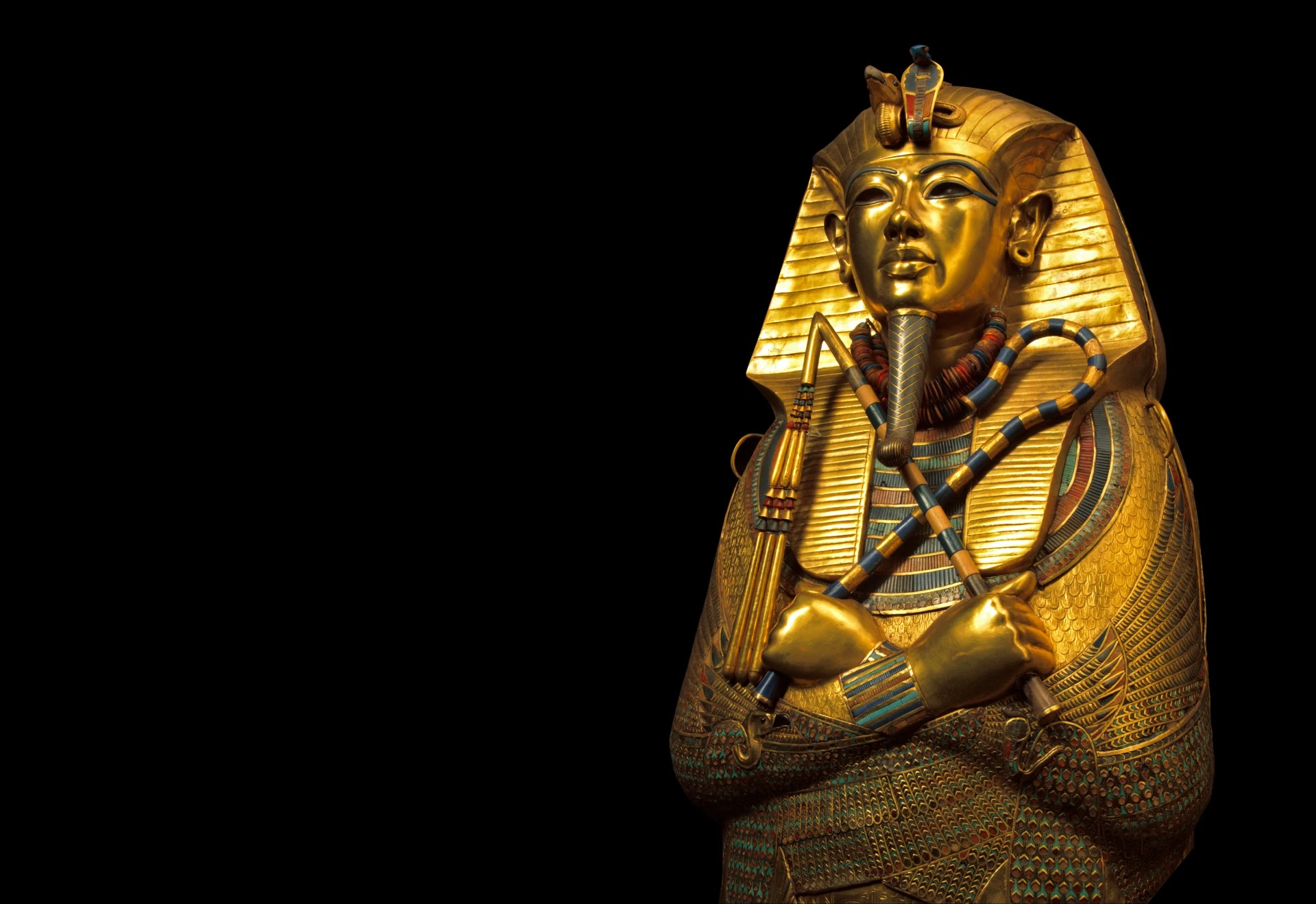
The golden mask of King Tutankhamun is the most expensive and famous artifact in the world. The mask is a block weighing 24 pounds (11 kilograms) of polished hammered gold, beautifully and amazingly made more than 3,300 years ago, with eyeliner of lapis lazuli and eyes of quartz, and it has Other precious stones are rare, including those that do not exist on earth.
The mask represents a royal headdress with a false beard, a necklace of three branches, and a necklace on the chest. A female vulture and a cobra snake rise above his forehead for protection. There are two holes in the ears to install earrings in them. “The mask is well-made.”
Valley of the Golden Mummies:
In March 1996, 6 kilometers from the city of Bawiti – the capital of the Bahariya Oasis in Egypt – the Valley of the Golden Mummies was discovered. During the first season of excavations, the sand was removed from more than a hundred complete mummies. Where never before has such a large number of mummies been discovered and in a good state of preservationThe mummies date back to the Greco-Roman era. Which showed different models and styles of art and a representation of all the social classes that lived in this era, and some mummies were covered with a layer of gold from the head to the chest area; Which reflects the wealth of their owners, and the discovery of golden mummies reminds us of the discovery of the tomb of the golden king Tutankhamun.
Zahi Hawass, the discoverer of these mummies, mentions that they give a sense of awe when seeing them, perhaps because they relate to and relate to the other world. That distant and mysterious world of the living Egypt of gold:
1- The ancient Egyptian woman derived her strength from the strength of gold and her authority from the hardness of the metal and the length of its stay bright and distinguished and difficult to break, just as the two queens Nefertiti and Hatshepsut and other famous people of the ancient Egyptian civilization were. And gold inlaid with precious stones such as turquoise, emeralds, and sapphires.
2- In the Old Kingdom, jewelry was made of beads, and the use of jewelry was not limited to kings, but was used by the general public, with the replacement of gold by metal such as copper or bronze.
3- In the Old Middle Kingdom, the situation changed if the ornaments were made of beads and faience, dominated by blue and green colors, and formed in the form of hawks, shells, beads, or other forms of parts of the human body.
4- The use of gold was expanded in the modern state when adornment became a general characteristic, as men used to wear rings, earrings, and necklaces, and then their use of gold increased in abundance, and starting from the 19th dynasty, silver was used in jewelry.